You would be hard pressed to find outdoor cleaning as complicated as some make it out to be. A little patience and a soft-bristled brush with your garden hose will see you further than an array of chemicals. Dry brush first, conserve water, opt for non-toxic products and ensure any runoff is kept from stormwater drains, pets and plants.
I am Frederick Ashbury. I have done my share of garden work to know that one does not need to overreact to outdoor grime. The least forceful method will have dirt, leaf stains and mildew ceding to it if given time. In this guide I set out how to go about eco-friendly surface cleaning on everything from pavers and concrete to decks, walls and furniture, making it useful for maintaining backyard areas in a manner suited to the home and climate here in Australia.
What qualifies as eco-friendly?
It is about minimising the impact of the entire task, not just what is in the bottle. One should use less water, go for biodegradable options and eschew superfluous chemicals so they do not end up in the drain or the garden.
The way to be sustainable is to be gradual. Get the loose dirt off, put in some spot-cleaning on the more obstinate marks and rinse no more than is called for. You may have a mozzie or two in attendance but at least it will not have half the local catchment in chemical runoff for company.
Reduce Water And Runoff
Conserve water from the moment before you even put the hose on. Put a broom or vacuum to any cobwebs, leaves or soil. Then wet only what you can get to right away. Dirty water should be collected or sent to some absorbent soil, not allowed to run into the stormwater.
Consider that a hose putting out 10 litres a minute will consume 100 in 10 minutes. Of course pressure and nozzle size are variable so that is merely an example. But with a trigger nozzle and brief rinses the waste is much diminished.
Safer Ingredients
Mild dish soap, baking soda and vinegar are all useful and non-toxic, though not for every surface. Vinegar’s acidity can be detrimental to natural stone and certain sealants or finishes. Baking soda has an abrasive quality so test it and do not be too heavy handed.
Do not put vinegar and bleach or other cleaners together under any circumstances; the fumes are hazardous. Store products where children and pets cannot reach them and stick to the label.
Methods For The Surface
Speed should never take precedence over being safe with the surface. What is fine for concrete could mar sandstone or strip a coating off timber. Try the gentlest approach the material will stand. Put a hidden patch to the test and let it dry to see how it looks.
| Surface | Starting Method | Common Risk | Best Practical Tip |
|---|---|---|---|
| Sealed pavers | Sweep, soft brush and mild soap | Sealant damage or clouding | Make a small test patch |
| Concrete | Diluted cleaner, dry brushing and a low-pressure rinse | Streaks, etching | Tackle in sections |
| Timber decking | Low-pressure water and a soft brush | Splinters, raised grain | Do not let water sit and follow the grain |
| Brick walls | Spot clean gently and dry brush | Erosion of mortar | Low pressure at the joints |
| Natural stone | pH-neutral product, gentle brushing | Dullness or staining | No vinegar unless the maker says otherwise |
Read The Surface
Before you apply water, check for failed sealant, rust, peeling paint or loose pointing. On masonry and rendered walls, water in damaged spots will only compound the issue.
There is a tendency to see a stain and think that is the whole of it. Mould on a wall in the shade could be telling you there is dampness or a blocked gutter. Clean it if you like but address the moisture or it will come back like an unwanted relative.
Patios And Pavers

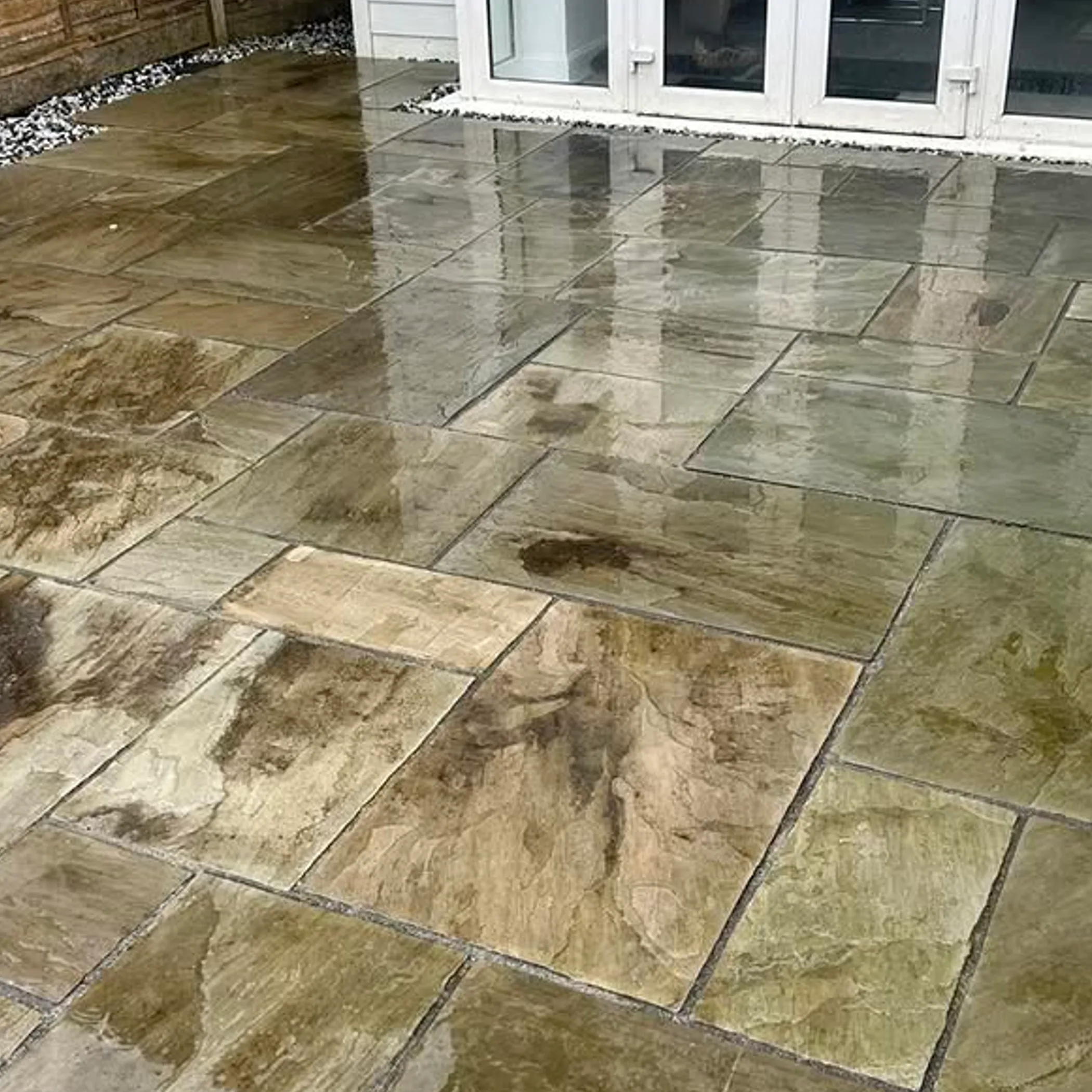
A methodical job of clearing the dry material prior to washing is best for patios and pavers. It is kinder on the water supply and means less scrubbing, with less risk of driving grime into the beds or joints.
When picking a patio cleaner, look past the “natural” claim on the front of the bottle and read the disposal instructions and compatibility. Some things are not harmless to waterways.
A simple process for the patio
- Sweep up all the loose dirt, leaves and weeds.
- Take a small area, wet it and put on some diluted dish soap or a biodegradable product of choice. Work it in with a soft brush.
- After the dwell time the label calls for, give it a light scrub and a controlled rinse.
- Inspect the joints and rework them as opposed to putting the whole patio through another wash.
Where there are greasy marks, put a little baking soda on the dampness and after a moment or two give it a light brush. One should not overdo the powder and let it get into the garden soil; just because something is “homemade” is no licence to use it by the bucket. Make a test run on any pavers that are sealed or of a colour.
Dealing with Mould And Mildew
These are as much an issue of moisture control as they are of cleaning the surface. See what can be done to get more sunlight and air about the place, put in some trimming of vegetation from the walls and make sure water is not pooling at the side of the patio.
Should growth become a habit, turn to a biodegradable outdoor product that is sanctioned for the material and has the right label. Keep pets off the area while you apply it and until it has dried. There is no point in mixing products or thinking a heavier concentration will do a better job.
Concrete And Paths
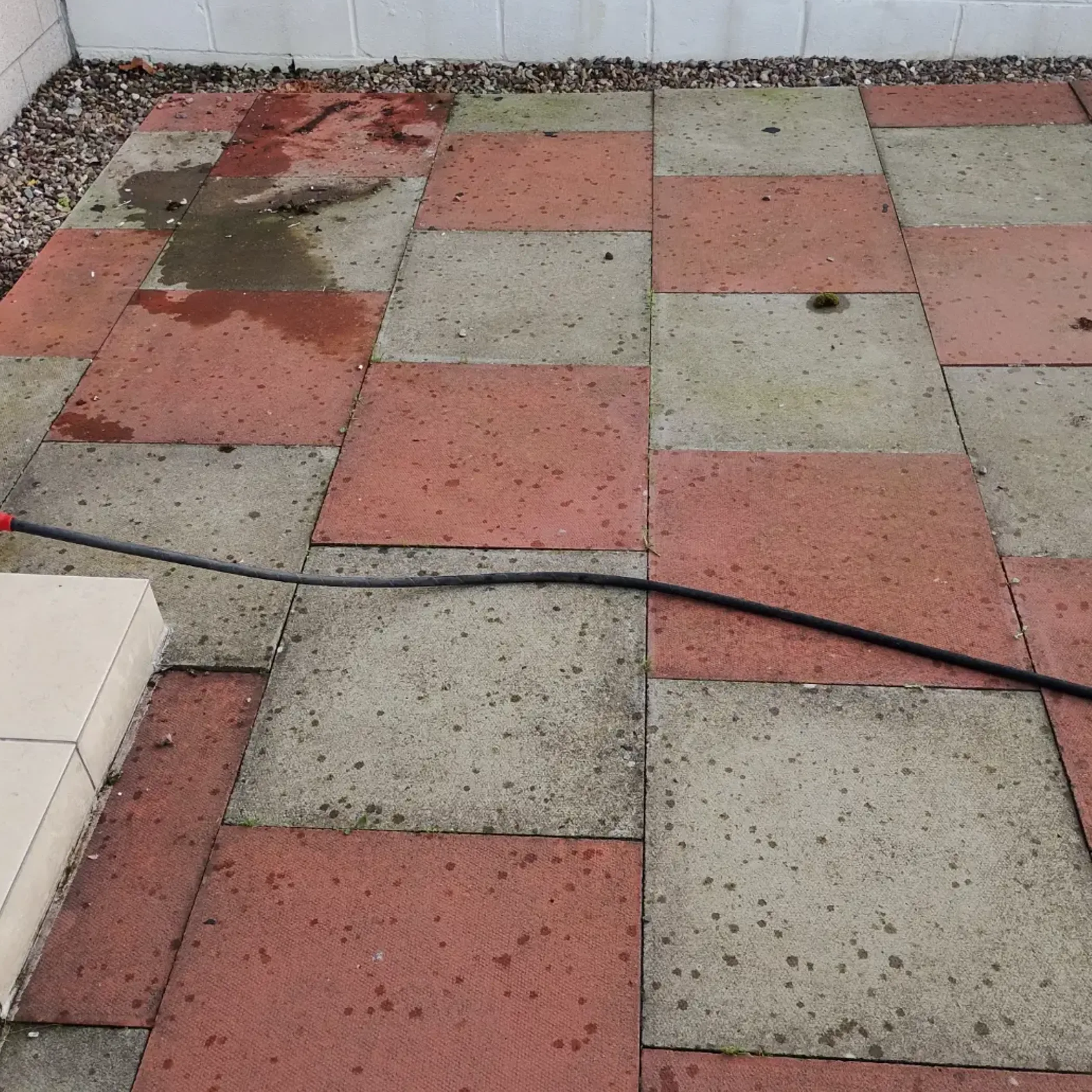
Concrete has its toughness but one must not mistake it for being indestructible. Pale patches and exposed aggregate are the sort of lasting damage that comes from strong acids and uneven scrubbing. The way to go about concrete, driveways and paths is to sweep and then treat as required. It is best to work from the cleanest part in towards the dirtiest so as not to be dragging grime over what you have just put right.
Dirt Removal That Does Not Etch
Warm water with a dash of mild dish soap will do, along with a stiff non-metal brush for the scrubbing; rinse off with the hose spray nozzle. Oil calls for an absorbent to take up as much as you can before you follow the instructions for disposal.
Some would have you believe vinegar is the answer for all your homemade outdoor cleaning needs yet it is not well suited to a lot of natural stone and can have an effect on concrete. Only employ it if the manufacturer of the surface says so. If there is any question, a pH-neutral product tested in an inconspicuous spot is the way to proceed.
Making Driveway Access
Get the cars and pot plants, toys and bins out of the way. On a slope one has to be mindful of where the rinse water is going. A driveway that runs to the footpath might need barriers or to be done in smaller sections to keep the kerb from getting dirty water.
And be realistic about drying time. An Adelaide Hills afternoon in the sun will see a path dry in short order, whereas a cool morning’s work on a shaded stretch of concrete could leave it damp for hours. Then there is the matter of heavy rain, extreme heat or a wind that would carry spray to the neighbours’ fence or onto a car; do not start cleaning under those conditions.
Exterior Walls And Decks
Some restraint is called for with painted walls and timber decks. A soft brush will put more dirt to shame than a pressure wand wielded in haste and low-pressure is the safer option. Eco-friendly washing of the house is about the right product for the coating and keeping the overspray from the garden. It also means coming to terms with the fact that certain old stains are better put right with maintenance or a new coat of paint than an heroic application of detergent.
The Grain Of Timber
Dampen a small patch and with diluted soap or a cleaner safe for timber, brush in the direction of the grain. Do not let water stand in one spot, high pressure has a way of raising the grain and making splinters.
I was once cleaning an older timber landing close to Stirling and put down the grey to dirt. In truth it was weathered timber and a more vigorous approach would have taken more off the surface without improving it. A dull lesson but a useful one: test the material before setting out to put it right.
Walls And Gardens
Delicate plants should be moved or covered, though plastic is not advisable in the heat. Pre-wet the foliage with plain water if the label allows and see to the leaves afterwards. Have the windows shut and stay clear of open doors and electricals; low-pressure may cut down on spray but it does not render every cleaner safe for breathing or for a painted wall.
Water Conservation
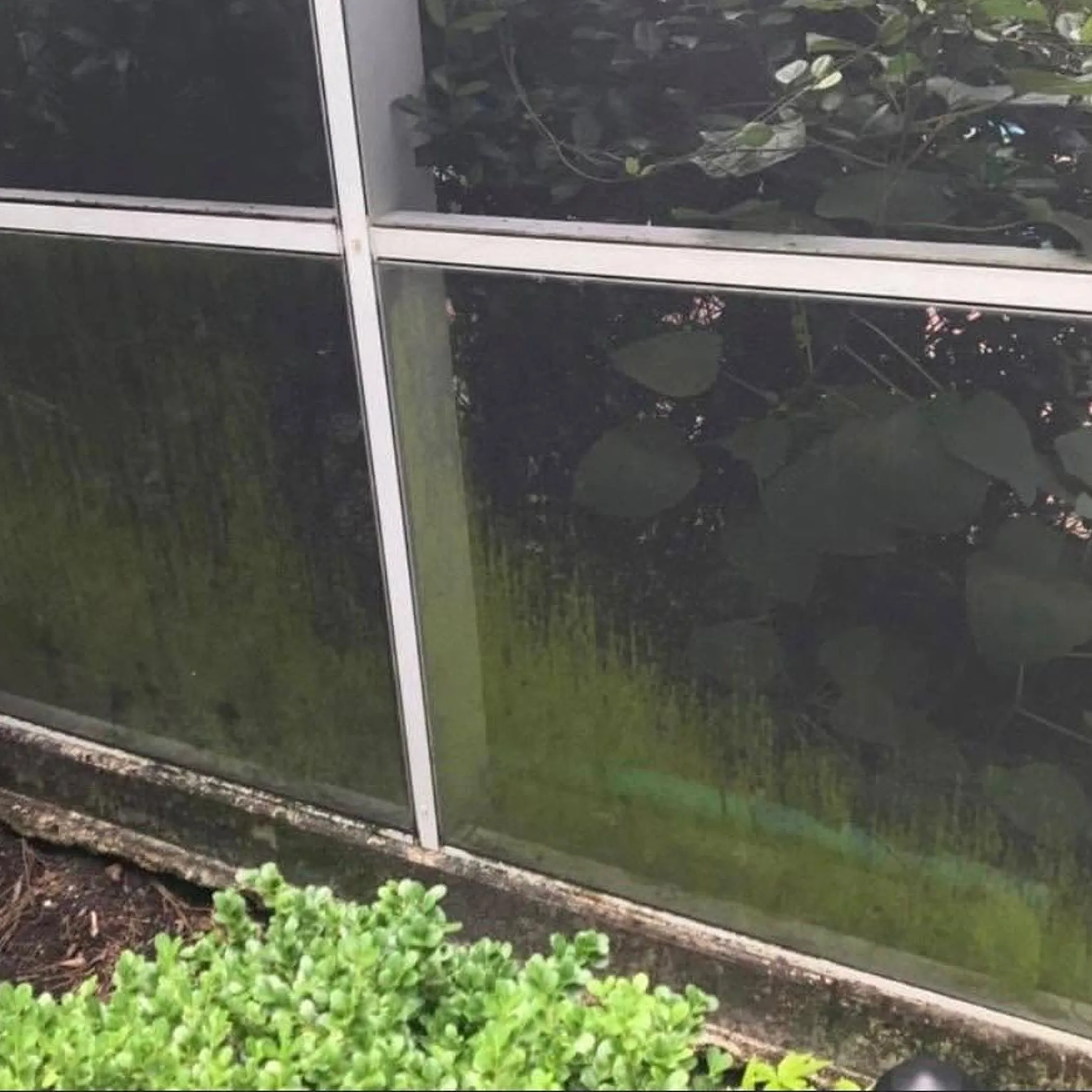
There is a sustainable way to do pressure washing by being economical with the force, flow and detergent. You want to rid the surface of contamination, not have it look like it has been through a cyclone. This is particularly so with older sealants, mortar and timber. While a pro has his equipment, the householder can limit waste with some preparation and a quick rinse.
Have the right tools at hand. A trigger nozzle, a soft-bristled brush, some cloths that can be used again and a bucket. The cloths mean less paper towel is needed for a spill or the odd bit of furniture. Leave the pressure washer for when the surface can stand it and the runoff can be contained.
Work in sections, keep a sensible distance and have the nozzle in motion. As for what to spray at, do not direct it towards people or pets, nor at electrical outlets, loose mortar or any timber that is damaged. Put on gloves of the right type for the product along with eye protection and enclosed shoes.
A One-Day Plan
When you are down to a single day, make of it what you can by concentrating on those areas where safety or hygiene is paramount: entry steps, slippery paths and the like, as well as entertaining spaces that see a lot of use. Get the cleaning done early so the surface has time to dry and you can put in a second look; there is no sense in tackling a big driveway just before the sun goes down.
One would be better off starting with a small path or patio than a large pressure-washing undertaking, a rendered wall or a multi-level deck. If water starts to head for a drain, the colour of the surface alters or the coating lifts, put a stop to it.
Better Cleaning Products

There is an environmental case for biodegradable outdoor products, but that does not mean one can be careless. An over-application of a concentrated product will do harm to plants, pets and aquatic life if it finds its way into a waterway.
Seek out eco-labels you can trust and read the directions, disposal advice and ingredient list. Where a refill system is convenient, go for it, and do not purchase more than can be put away safely.
Reading The Labels
To be green about exterior cleaning you have to be honest in your reading of the label. See if the product is fit for the surface, requires dilution or comes with a warning for certain plants or drains.
Do not be taken in by “eco” or “natural” claims. A good product will instruct you on safe application. Vague instructions are reason enough to go with something else or put it to the manufacturer for their view on disposal and the surface.
Runoff And Drains
Stormwater systems will take the water without the kind of treatment given to household sewage, hence the need for some care with your cleaning water. The NSW Environment Protection Authority has some sound official guidance on why pollutants should not be in the drains.
Locate the closest drain prior to commencing and divert or block flow in a temporary and safe fashion. There is no room for creating a flood hazard or obstructing public works. Solid debris should be put to the household waste service.
Cleaning Mistakes To Steer Clear Of
Excessive force, water or product are behind most problems. More often than not the surface calls for proper preparation, not a heavier chemical.
Then there is the weather. In the Top End the humidity of the wet season will put a brake on drying and mildew will set in. Down south a bit of winter rain and cold shade will leave timber damp. Up north you may want to hold off on any outdoor work when cyclone alerts in the November to April period bring wind and heavy rain.
Where People Go Wrong
- Sweeping after they have pressure-washed, which only puts dirt in the joints and garden.
- Applying vinegar to natural stone and sealants.
- Letting the sun dry the product before a rinse can be had.
- Overlooking blocked gutters or poor drainage as the source of mould.
- Allowing biodegradable products to run off into stormwater.
- Putting bleach to use around pets and waterways with no regard for the risks.
Sometimes the result is an uneven colour. A patch you have cleaned will seem brighter and the whole area worse for it until you have been consistent. Make a start in an inconspicuous corner to get an idea of the finish.
Frequently Asked Questions
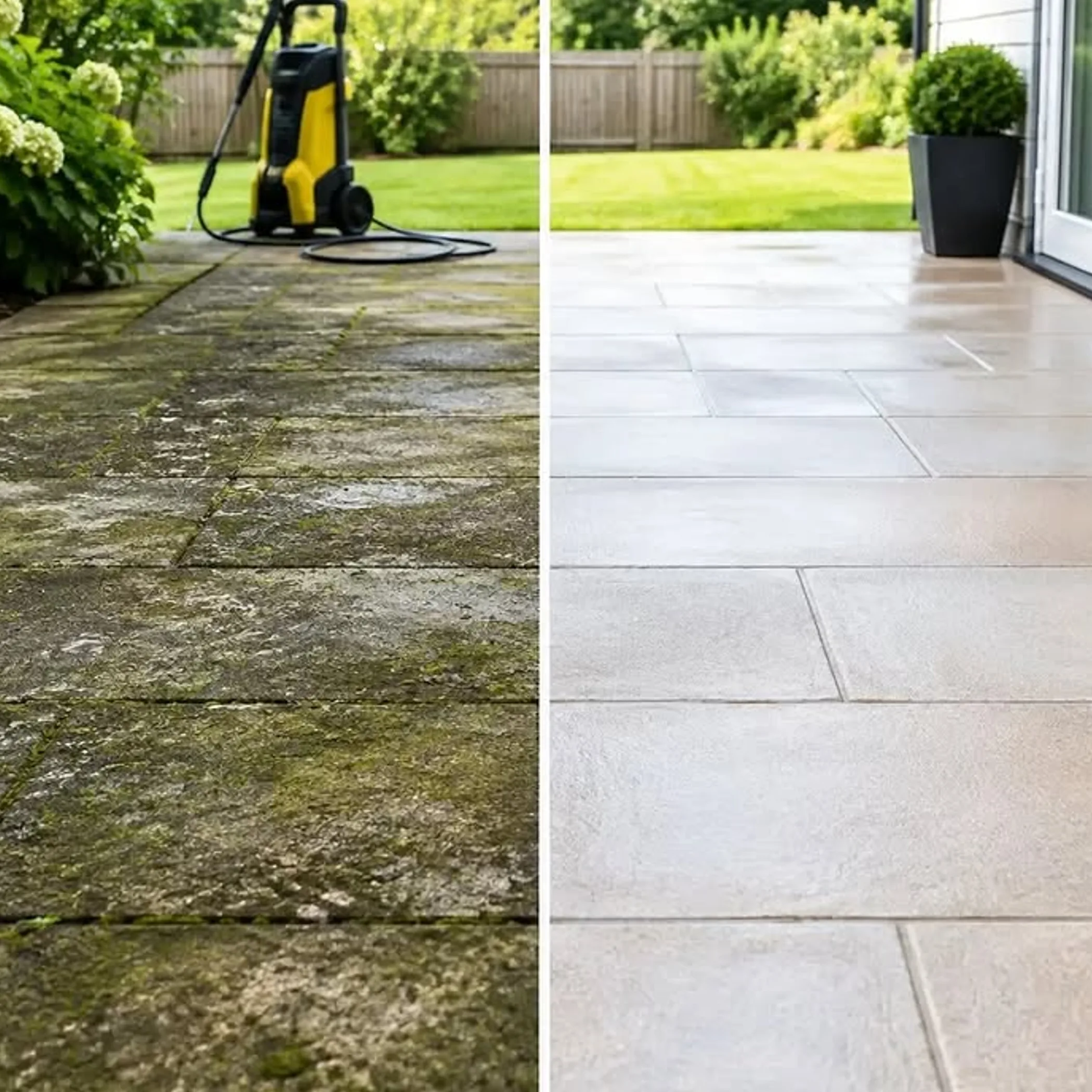
I am asked these questions a good deal from those who wish to have a tidy outdoors without making of the garden a chemistry set. My answers are straightforward but specific instructions from the label or surface manufacturer should always prevail.
The best environmentally friendly patio cleaner?
Something biodegradable and surface-safe at the lowest concentration you can get away with, or a dish soap for light soiling. No one cleaner is right for all pavers or stone. Test it, sweep up first and ensure runoff does not get to the drains or plants.
Eco-friendly methods?
Reliable ones include spot cleaning, dry sweeping, low-pressure rinsing and the use of re-usable cloths. You will conserve water by working in sections and only rinsing once the dirt is loose.
The 5-5-5 rule?
Do not assume it is an official standard of safety; it is interpreted in various ways. With outdoor work it is more dependable to control runoff, test first and employ the least aggressive method the label allows.
Homemade cleaners?
For sealed surfaces with a little grime, some mild dish soap in water is a safe bet. Baking soda will sort out an odd mark if you are gentle with it. Check before using vinegar, it is not for every surface, especially natural stone.
Is pressure washing eco-friendly?
It can be if you manage the runoff, eschew superfluous detergent and keep the pressure and water flow to a minimum. It is not sustainable by virtue of being quick; brute force is no substitute for a well prepared surface and some control of the nozzle.
Be Sensible About It
In the main, an eco-friendly approach to outdoor cleaning is one of restraint. Use non-toxic agents where you can, be careful with biodegradables and keep chemicals off the drains and away from pets.
A modest routine is the way to maintain the backyard. Tackle the mould, fix the leaks and do a little section here and there so it does not become a weekend job. Regular sweeping and that sort of thing will save you water and the trouble of it, and you will have more time to boil the billy later on.
